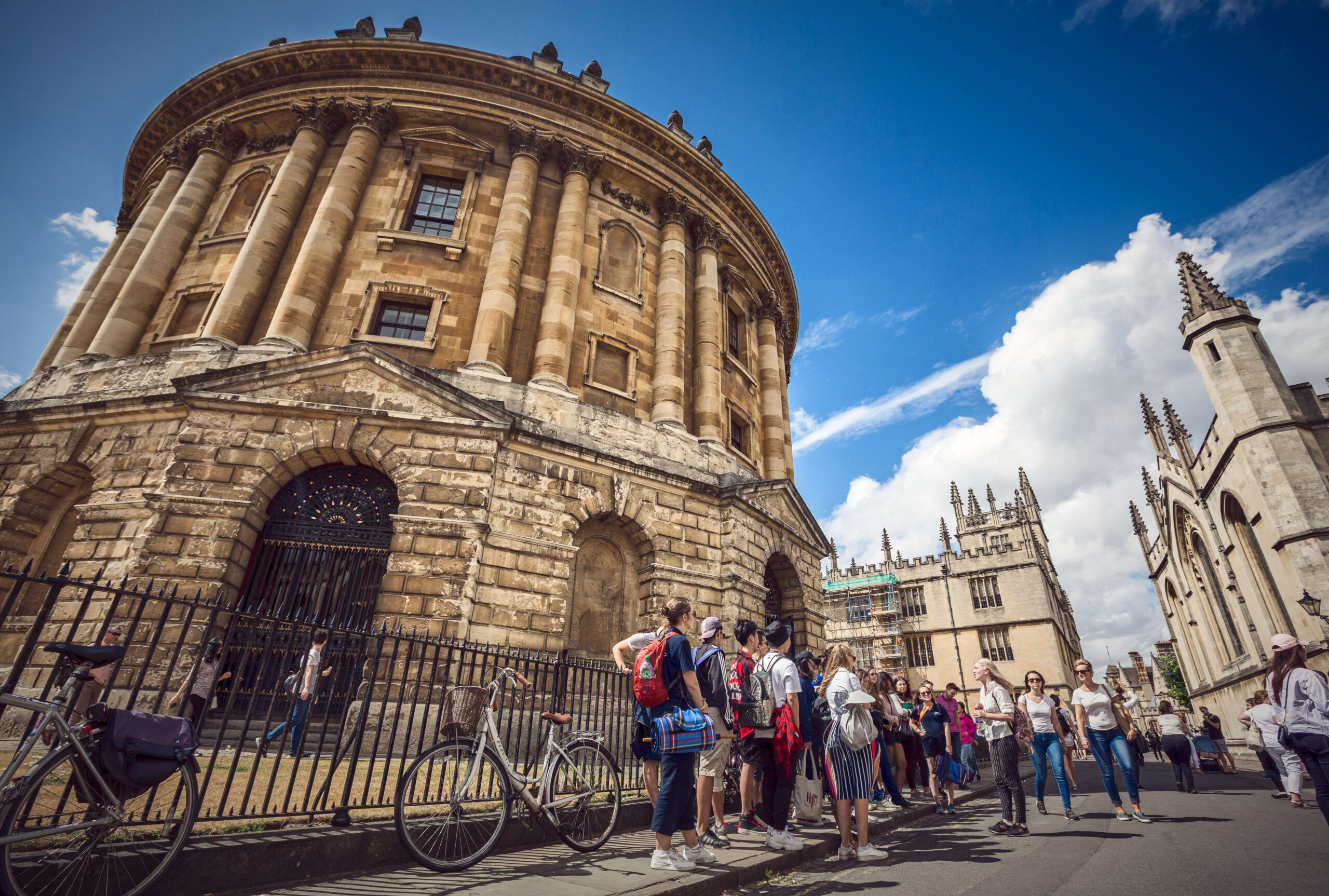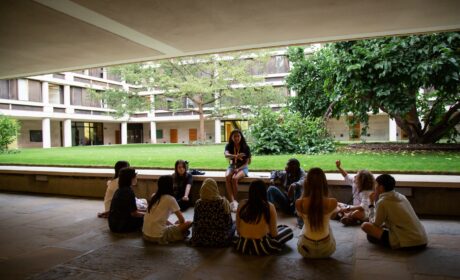
While waiting to hear the government’s next announcement on May 17th, as lockdown restrictions ease in England & Wales, I thought it might be fun to explore some very English quirks. I came across a funny article on the Oxford university website, about how Brasenose College was named. Brasenose College is where our Advanced Study Programme takes place in the summer, so I thought it apt to share.
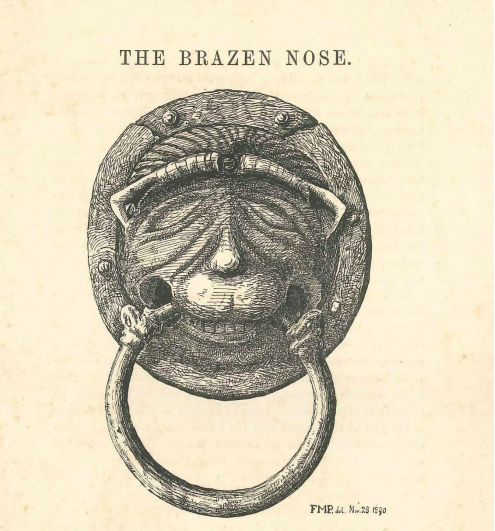
Many visitors (and some locals!) wonder what the name “Brasenose” actually means. One theory, and probably the most accurate, is that it refers to a ‘brazen’ (brass or bronze) door knocker in the shape of a nose.
Before Brasenose College was founded in 1509, part of the site was occupied by a private medieval hall named Brasenose Hall. The earliest mention of the name Brasenose on this site appeared in the mid-13th century, and it is believed that this unusual name passed to the Hall and thence to the College. Oxford University purchased Brasenose Hall in 1262, though a long silence on its history followed, supposedly due to the migration of a large group of rebellious students to Stamford in Lincolnshire, on the East coast of England, in 1333.
It is believed that one of these students from Oxford took a door knocker, which had hung on the entrance to Brasenose Hall, with them to hang on the door in their new quarters in Stamford. In due course, by order of the king himself, the rebellion was suppressed, and the students ordered to return to Oxford. In 1890, Oxford University received notice from a firm of auctioneers that this dwelling known in Stamford as ‘Brasenose’ was to be sold, together with its ancient door knocker dating back to the twelfth century. Brasenose College purchased the house for the sake of the door knocker and it now hangs over the high table in Hall. The door knocker in question is a face of a lion or a leopard commonly seen in heraldry, with a prominent nose; it is made of brass or bronze with an iron ring protruding from its jaw. College historians of the 1890s were convinced that the rebellious students of Brasenose Hall took the knocker from which they derived their name to Stamford in the fourteenth century, and that it had been restored to its rightful home at last.
Funnily enough, noses feature around Brasenose College throughout its history. More than one nose has been placed over the main door and they can be found in the glass in Hall. The Archives have a carved nose once attached to the College Eight, a nose tie pin of the 1870s, and one of the nose pipes smoked by Brasenose undergraduates in the years before the First World War.
The present metal Nose, on the gateway of the College, is of a grotesque type, with a visible nose, and may have been copied in the sixteenth century from a nose still to be seen in the glass of the North window of the East end of the Hall. This is a very nosey tale indeed!